
Guide for planning the future of your language (GPFL) is a tool for the language communities for the planning of their language development activities. The Guide helps the communities to find out the conditions of their language in the area of identity, orality and written. Language in identity level is the language used only for the sake of identity with using of few words, phrases and greetings by old people in the community. Language is seen “Used only to unite group.” Apart from that, it is not used for exchanging ideas in daily communication. Language in orality level is a language used in daily conversation. it is spoken by young and old people in the community. Language in writing or education level, is a language which is used in writing, which has been used in education and is known to many people outside the community. GPFL training helps people to discover at what condition is their language and how to plan to develop their language according to the language conditions they discover through GPFL. The language only in identity level, cannot be planned for the education immediately. According to the Sustainable Use Model (SUM) of language development tool, every language is governed by the five FAMED (Functional, Acquisition, Motivation. Environment, Differentiation) conditions. These five conditions are like the five strong walls which protect the language to be vigorous enough. GPFL training is based on the SUM model (Lewis and Simson, 2017). This model is to help the language community to maintain sustainable history, sustainable identity, sustainable orality and sustainable literacy (reading and writing). In this training Mother Tongue facilitators are trained to use this tool to discover their language status and then plan accordingly for the future of their language.
MTCN has trained different language communities on different times with regard to GPFL training.
| Date | language | ToT participants | Field work areas and no. of participants | Total participants |
| 022, March 7-9 | Urawn | 4 | 4 | |
| 022, March 7-9 | Danuwar | 4 | Harsahi, Sindhuli 17 people | 21 |
| 022 March | Gamal Kham | 4 | 4 | |
| 022 Aug 5-6 | Chhathare Limbu | 6 | 6 | |
| 016 29 May-31 June | Jumli | 29 | 29 | |
| 017, July 29 | Gurung | 11 | 1. Tamu Dhi Nepal Kaski- 45 people 2. Janakalyan Samaaj Sewa Samitee Pokhara-35 people 3. Tanahu Tamu Samaaj, Pokhara- 38 people 4. Gurung Church, Pokhara-25 people 5. Nagbeli Tamu Samaaj, 15 people 6. Dhandruk Tamu Samaaj, Pokhara-25 people Total participants- 183 | 194 |
| 015,Feb 8 | Majhi | 8 | 5 villages- Sindhuli, Okhaldhunga, Ramechap, Sindhupalchowk, Kavre and Khotang Total participants- 284 | 292 |
| 015 July 27-29 | Darai | 10 | 10 | |
| 015 July 27-29 | Magahi | 3 | 3 | |
| 021 Sep.19 | Meche | 16 | 16 | |
| 020, Dec. 19-21 | Dumi Rai | 12 | Khotang Sapteswor-32 Baksila- 18 Jalpa- 38 Kharmi- 32 Total – 120 | |
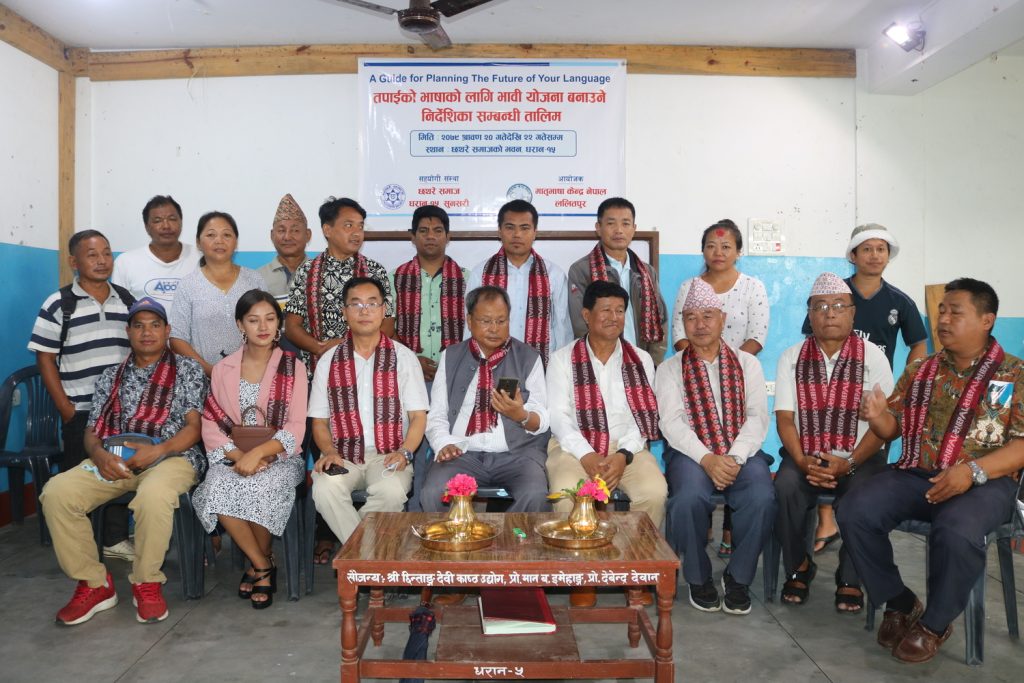
Chhathare Limbu GPFL Training
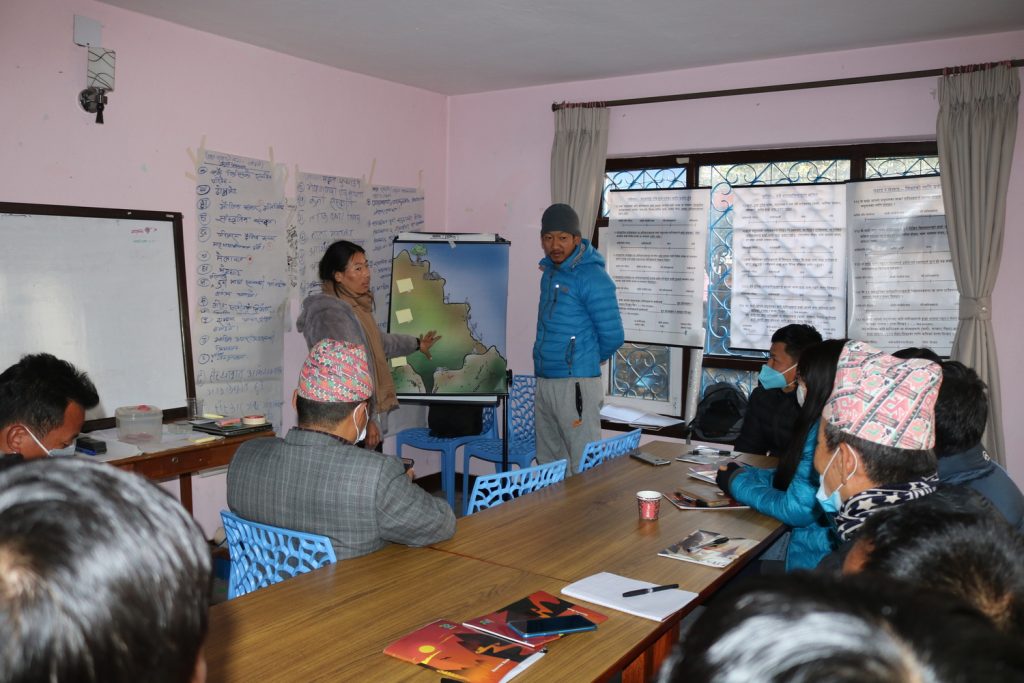
Dumi Rai GPFL Training
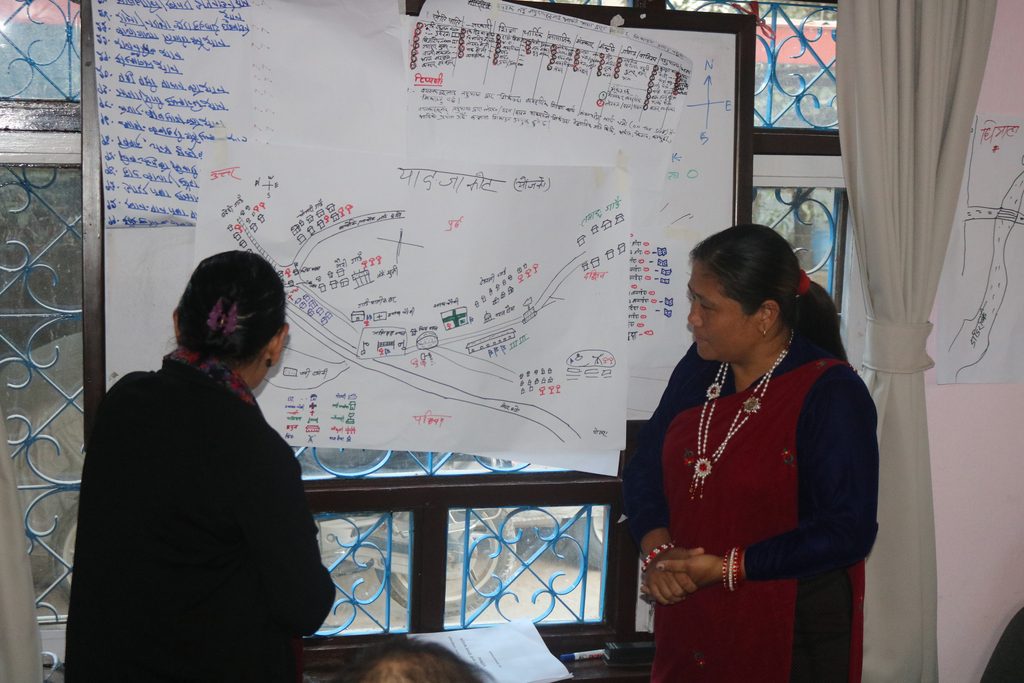
Gurung GPFL
Journey
GPFL training fosters the language community to discover suitable path for journey in the language development goal. For the purpose of SUM in the language development goal, GPFL findings need to be converted into decision making parameters to measure the language development efforts consistently exerted by the language community. This consistent efforts are journey of the language community in the path of SUM. A language which is used only for the sake of its history should keep its journey in the sustainable history. This journey will encourage the language to acquire the status of sustainable identity of the language community. The journey for the sustainable literacy will be difficult for such a language in practical way. The language which has been used only in identity purpose, should keep its journey in the path of identity. This kind of sustainable journey will bring the language community in the path of sustainable orality. If the journey persists, the language is destined to sustainable literacy. nothing exists without a precedented cause. so, the journey of sustainable path should be kept on rolling. some languages are just remembered at far distance past, and nothing can be done significantly, but used it only for history and memory. some are spoken, but have empty pages; nothing get written; no books exist in that language. The library suffers an empty book-shelf for such language. some language are written, but suffer in the digital field when get computerized.https://asia.sil.org/why_languages_matter So, an appropriate journey will make the language arrive at a sustainable use. What we do with our findings through GPFL is far more important than just get trained how to find facts.